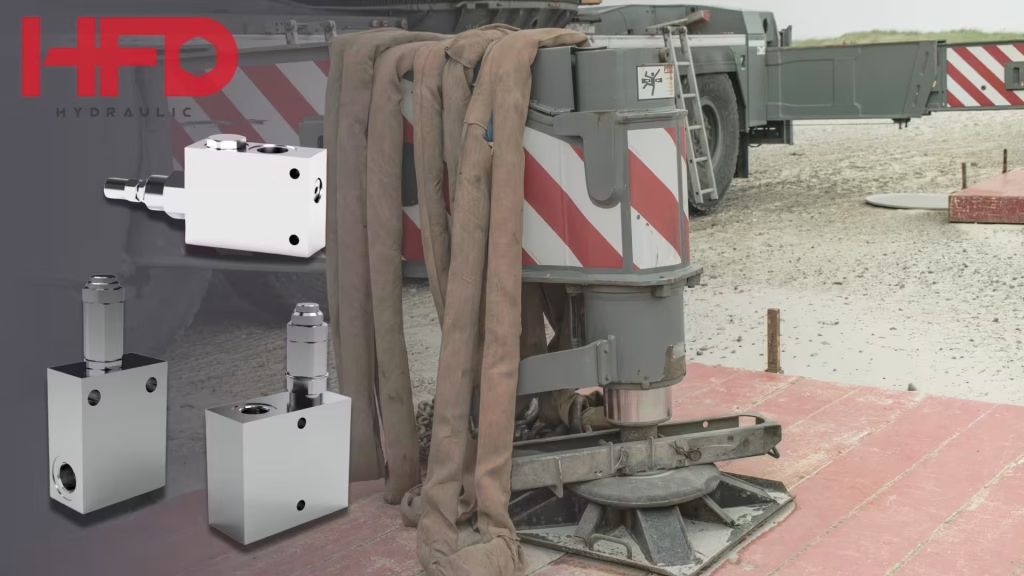
A crane truck doesn’t set itself up by accident. Each outrigger has two jobs: the horizontal beam slides out to widen the machine’s footprint, and the vertical jack lowers to take the weight off the tires. The order matters. Lower the jack before the beam is out, and the beam may not be able to slide at all. A sequence valve is the simplest hydraulic way to enforce that order. It holds oil back from the jack until the beam has finished its stroke, and it uses pressure alone to decide.
The stakes are real. One OSHRC judge’s decision describes a mobile crane that tipped over while sitting on half-extended outriggers, seriously injuring the operator. US compliance guidance calls for outriggers to be fully extended, or deployed as the load chart specifies, and set so the machine’s weight comes off the wheels. This article covers how a sequence valve fits into an outrigger circuit, which HFD valve suits which conditions, and where a sequence valve stops being the right tool.
Quick Overview: Sequence Valve in Outrigger Circuits
What does a sequence valve do in an outrigger circuit?
A sequence valve holds oil back from the vertical jack cylinder until the horizontal beam cylinder has finished its stroke and system pressure reaches the valve’s set point. The beam goes out first and the jack goes down second, with pressure alone making the call.
How it works, step by step:
- Beam extends – the cylinder moves at low pressure because it only fights friction
- Beam reaches end of stroke – oil has nowhere to go and pressure rises
- Set point reached – the sequence valve opens
- Jack lowers – oil now reaches the jack cylinder
- Retraction reverses the order – jack up first, beam in second
Which HFD valve fits which circuit:
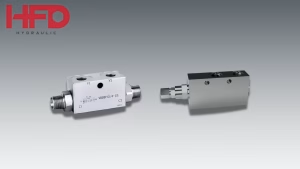
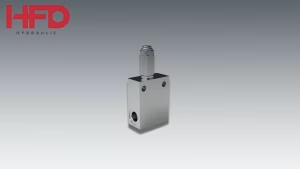
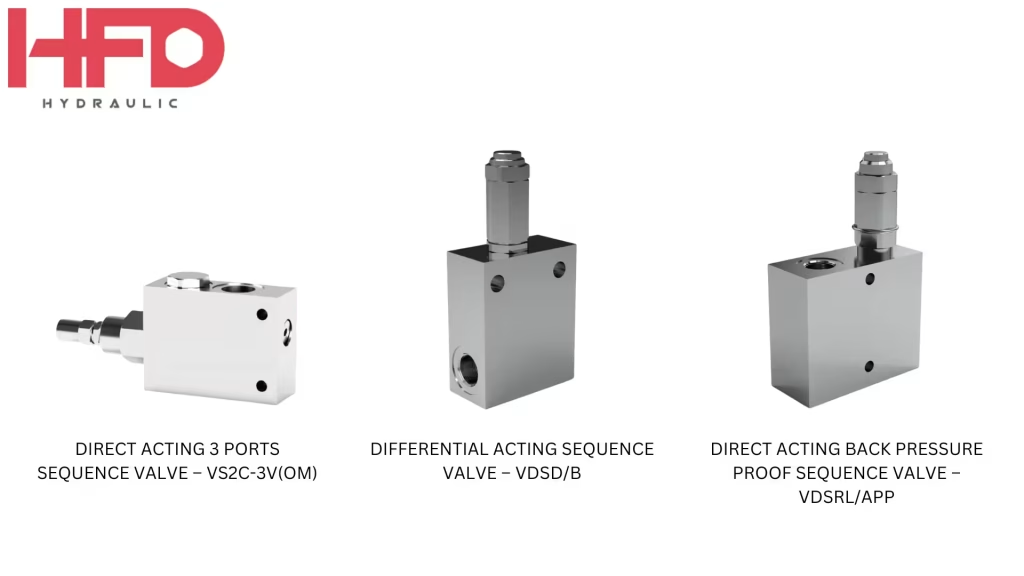
- VS2C-3V(OM) – fewer connections; check that the pump can supply both cylinders’ pressures combined
- VDSD/B – shared return manifold with variable back pressure and no drain line
- VDSRL/APP – back pressure present and a drain line available
Example
On a truck-mounted crane, the sequence valve keeps each jack from lowering until its beam is fully out, so the machine sits on its full footprint before any load is lifted.
Summary: Use a sequence valve to build the beam-then-jack order into the circuit, pair it with locking valves on the jacks, and treat it as part of the safety setup, not a replacement for interlocks.
How a Typical Outrigger Circuit Is Built
Most outriggers on truck cranes, aerial work platforms, and similar mobile machines use two cylinders per leg. A horizontal extension cylinder pushes the beam out of its housing. A vertical jack cylinder at the beam’s end lowers the foot to the ground and then lifts the machine. Deployment runs beam out, then jack down. Stowing runs in reverse: jack up, then beam in.
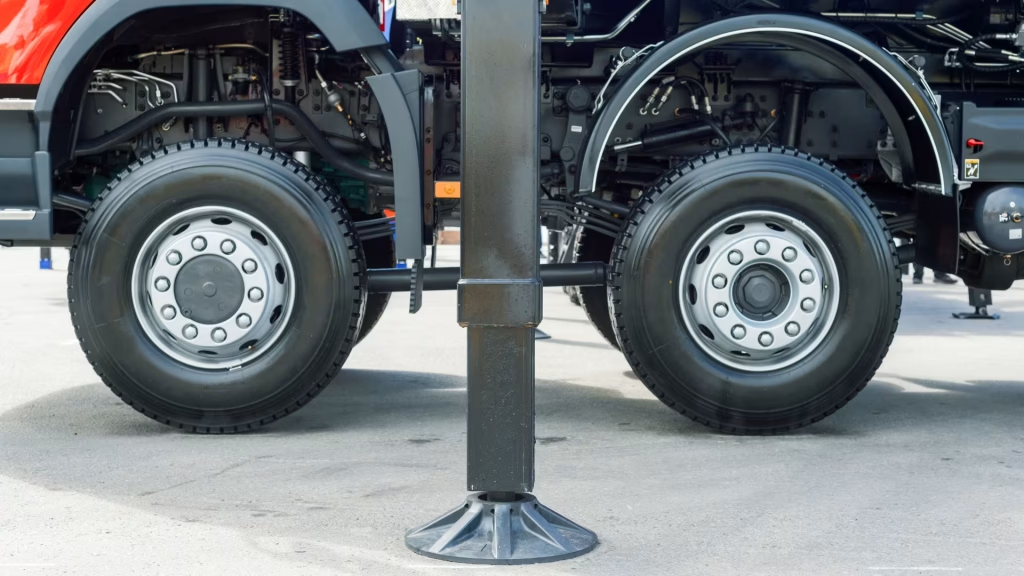
Many machines leave that order to the operator, with separate controls for the beam and the jack. That works until someone is rushed, distracted, or new to the machine. A sequence valve builds the order into the circuit, so one command produces the right movements. A European patent filing on sequential cylinder control describes the same goal: the operator wants the full stabilizer sequence from a single command, without extra maneuvers.
How a Sequence Valve Enforces the Order
A sequence valve is normally closed. A spring holds it shut until pressure at its inlet reaches the set point. In an outrigger circuit, the inlet is connected to the line feeding the beam cylinder. For a closer look at the mechanism, see our guide on how a hydraulic sequence valve works.
During deployment:
- The operator commands “extend.” Oil flows to the beam cylinder, and the jack line stays blocked by the closed sequence valve.
- The beam moves at low pressure, because the cylinder only has to overcome friction and the weight of the beam section.
- When the beam reaches the end of its stroke, the oil can’t go anywhere and line pressure climbs.
- At the set pressure, the sequence valve opens and oil reaches the jack cylinder.
- The jack lowers to the ground and starts to lift the machine.
Retraction is the mirror image. A common arrangement uses a free-flow check path so oil can leave the jack’s cap side during retraction, plus a second sequence valve in the retract line to make the jack come up before the beam moves. Circuit layouts vary by machine, so the OEM schematic is the final word on how many valves you need.
This isn’t a new idea. A patent for a stabilizing beam on uneven-terrain machines describes deployment stages controlled by sequence valves that respond to pressure in the jack chambers.
Choosing the Right HFD Sequence Valve for an Outrigger Circuit
Three factors decide the choice: how much plumbing space you have, how much back pressure the valve’s outlet sees, and whether a drain line is available. Whichever valve you pick, size it to the circuit flow with margin, and check the pressure-drop curves in the product datasheet.
VS2C-3V(OM): Fewer Connections, a Pressure Budget to Check
The VS2C-3V(OM) is a direct-acting, 3-port sequence valve. Port C connects to the primary cylinder, and port P serves both the system supply and the secondary cylinder’s head side. That consolidation reduces external fittings, which helps on a crowded outrigger manifold. It’s rated to 350 bar, passes up to 40 L/min in the G3/8 size or 70 L/min in the G1/2 size, and operates from -40°C to 100°C.
The caveat is additive pressure. When both cylinders share port P, the pump has to supply their combined pressure load in sequence. A jack that is only lowering to the ground needs little pressure, but a jack that starts lifting the machine needs a lot. Confirm the total against your pump and relief settings, and talk to HFD’s technical team if you’re unsure. Our 3-port sequence valve guide covers the additive-pressure check in detail.
VDSD/B: Shared Return Manifold, No Spare Drain Port
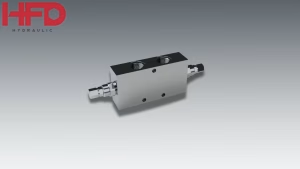
Outrigger circuits on mobile machines often share a return line with other functions. Back pressure at the sequence valve’s outlet then changes depending on what else is running. The VDSD/B differential-acting sequence valve uses a piston with two unequal working areas, so outlet back pressure doesn’t drift its trip point, and it stays a two-port inline valve with no drain line. A built-in check lets oil return from C to D freely.
It comes in four sizes with nominal flows of 30, 60, 120, and 200 L/min. The steel body is rated to 350 bar and the aluminum body to 210 bar. For the full mechanism, see our article on the differential-acting sequence valve and back pressure.
VDSRL/APP: Back Pressure Present, Drain Line Available
If the circuit already has a clean path to tank, the VDSRL/APP is the other way to hold a steady set point under back pressure. It’s a direct-acting design with five sizes from 25 to 120 L/min nominal flow, and it’s covered in our back pressure-proof sequence valve guide.
Sequence Valve Plus Load Holding: Two Jobs, Two Valves
A sequence valve decides when the jack moves. It doesn’t hold the jack in place. Once the machine is up on its outriggers, the jack cylinders carry the whole weight, and something has to lock them if the control valve returns to neutral or a hose fails. That job belongs to pilot-operated check valves or counterbalance valves on the jack cylinders. HFD’s pilot-operated check valves and counterbalance valves are built for it, and our comparison of pilot-operated check valves and balance valves explains when each fits.
The two valve types interact. Locking valves on the return path can create back pressure at the sequence valve’s outlet. That is why the drain and back-pressure question above matters in a real outrigger circuit and not just on a bench.
What a Sequence Valve Does Not Do
A sequence valve is not a safety interlock. It doesn’t know whether the ground is firm, whether the pads are seated, or whether the machine is level. Those are setup and inspection questions, and the rules in the load chart still apply.
It also senses pressure, not position. A beam that jams against an obstruction builds pressure just like a beam at end of stroke. The sequence valve would open, and the jack would start down with the beam only partly out. That’s the main reason many modern machines add position sensors or electronic control on top of the hydraulics.
Even electronic sequencing still depends on pressure information. Palfinger Epsilon recently described an outrigger control concept that detects each step of the process from characteristic hydraulic pressure signals and runs the steps in order through an electronic control unit, with pressure limits, per-step timeouts, plausibility checks, and a manual mode. The principle is the same as a sequence valve. The difference is the added layer of checks.
The practical view: a sequence valve is a robust hydraulic backbone for the order of movements, and the machine’s safety design should add interlocks and sensors on top of it. For valves that protect against other failure modes, see our article on hydraulic valves in aerial work platform safety.
Setting a Sequence Valve in an Outrigger Circuit
Commissioning decides whether the circuit behaves. A short checklist:
- Measure first. Record the pressure the beam cylinder needs to move through its full stroke, both cold and warm.
- Set above that, with margin. The valve must open only after the beam is done, so the set point has to sit comfortably above the highest beam-moving pressure.
- Stay below the relief setting. The sequence valve has to open before the relief valve does, or the oil goes to tank and the jack never moves. Our article on relief valve and sequence valve differences covers the distinction.
- Test cold. Thick oil raises the pressure needed to move the beam. The HFD valves covered here operate from -40°C to 100°C with a viscosity range of 10 to 200 cSt, and our article on sequence valve performance in extreme conditions explains the temperature effects.
- Check drain and back pressure. Confirm the drain configuration matches the circuit, as described in our direct-acting sequence valve guide.
- Lock the adjustment, then cycle. Run full extend and retract cycles and confirm the jack never moves until the beam is fully out, and the beam never moves until the jack is up.
Matching the Valve to the Machine
A sequence valve turns “beam first, jack second” from an operator habit into a circuit feature. Pick the VS2C-3V(OM) when connection count matters and the pressure budget allows, the VDSD/B when the return manifold is shared and a drain line isn’t practical, and the VDSRL/APP when a drain line is available. Then pair the choice with locking valves on the jacks and the interlocks your machine needs.
Need help matching a sequence valve to an outrigger circuit? Send us your circuit pressures, flows, and port sizes. Browse our sequence valve range or contact HFD for a free quote.